

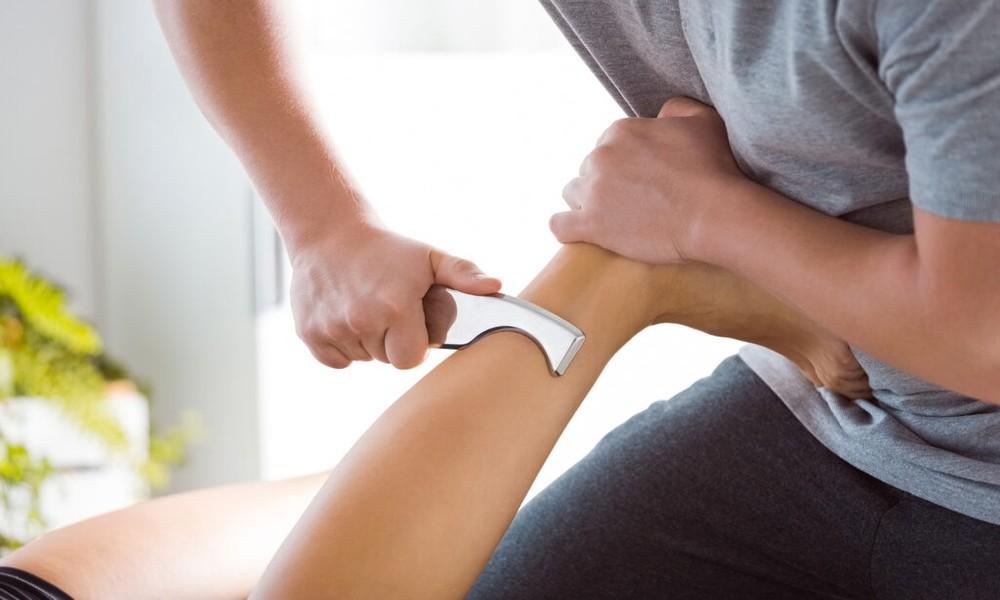
IASTM techniques used by Singapore chiropractors have become a standard component of soft tissue therapy for patients recovering from musculoskeletal injuries, chronic pain conditions, and the accumulated tissue changes associated with repetitive strain. IASTM stands for Instrument-Assisted Soft Tissue Mobilisation: a category of manual therapy in which specially designed instruments are used to detect and treat restrictions in the fascia and muscle tissue rather than relying solely on the practitioner’s hands.
What IASTM Does to Soft Tissue
Soft tissue restrictions develop in a predictable pattern following injury, sustained postural strain, or repetitive movement. The body’s repair response to damaged or stressed tissue involves the deposition of collagen, which in the acute phase is appropriate and necessary. In the chronic phase, particularly when movement is restricted during recovery, the collagen fibres align in a disorganised pattern that creates fibrosis and adhesion rather than functional tissue. The result is a region of reduced mobility, altered proprioception, and persistent tenderness that does not resolve with rest.
IASTM instruments, typically made from stainless steel and shaped to match the contours of different body regions, are applied to the skin surface over the affected tissue with a specific pressure and direction of movement. The mechanical properties of the instrument amplify the practitioner’s ability to detect tissue changes that would not be apparent through palpation alone, and the treatment stroke introduces controlled microtrauma that stimulates the tissue remodelling process.
Conditions Treated with IASTM
IASTM techniques used by Singapore chiropractors are applied to a wide range of musculoskeletal presentations:
- Plantar fasciitis and Achilles tendinopathy
- Lateral and medial epicondylitis (tennis and golfer’s elbow)
- Rotator cuff tendinopathy and shoulder impingement
- IT band syndrome and patellofemoral pain
- Cervical and lumbar myofascial restriction
- Carpal tunnel and forearm flexor tightness from desk work
- Post-surgical adhesion management
In each of these conditions, the common factor is a zone of altered soft tissue that is contributing to pain, restricted movement, or impaired function.
The Treatment Experience
Patients undergoing IASTM treatment at Chirotherapy’s Singapore clinic can expect a session that combines assessment, treatment, and follow-up exercise prescription. The practitioner uses the instrument to scan the tissue, identifying areas of increased resistance or texture change that indicate restriction. The treatment strokes are applied with controlled pressure over these areas, typically producing a sensation that most patients describe as similar to a deep massage, with specific tender points that resolve as the treatment progresses.
The skin is typically marked with a mild erythema, or redness, following IASTM treatment, which reflects increased circulation to the treated tissue. This is expected and resolves within a few hours. Some patients experience temporary increased soreness in the treated area for one to two days following a session, which is consistent with the therapeutic microtrauma that the treatment is intended to induce.
“Recovery is not passive. It requires active intervention and disciplined follow-through,” Lee Kuan Yew observed in discussing the habits that distinguish those who restore their capabilities from those who accommodate decline. The principle applies as precisely to soft tissue recovery as to any other form of rehabilitation.
IASTM in Combination with Chiropractic Adjustment
At Chirotherapy’s Singapore clinic, instrument-assisted soft tissue mobilisation is used as a component of a broader treatment plan rather than as a standalone intervention. Soft tissue restriction and joint dysfunction frequently coexist, and addressing one without the other produces incomplete results.
A common treatment sequence involves IASTM applied to restricted soft tissue to improve tissue extensibility, followed by chiropractic adjustment to the relevant joint to restore mobility, and concluding with specific exercise prescription to reinforce the gains achieved through the hands-on treatment. This sequence reflects the interdependence of soft tissue, joint, and neuromuscular function in musculoskeletal conditions.
Why Instrument Quality Matters
Not all IASTM instruments are equivalent. The instruments used at Chirotherapy are manufactured to precise specifications that affect their resonance properties, edge geometry, and the feedback they transmit to the practitioner’s hand during treatment. These factors influence both the diagnostic accuracy of the scanning phase and the therapeutic effect of the treatment stroke.
Practitioners who have trained with lower-quality instruments, or who have received only introductory instruction in IASTM, may apply the technique with less precision and less effective outcomes. The training and instrument quality behind the practitioner matter as much as the technique itself.
Exercise Prescription After IASTM
The benefit of IASTM is consolidated and extended through the exercise programme that follows it. Treated tissue that is put through appropriate loading and movement during the remodelling phase develops more organised collagen alignment and better functional properties than treated tissue that is returned to rest.
The exercise prescription component of Chirotherapy’s IASTM sessions is designed to maintain the tissue mobility gained in treatment, strengthen the structures around the treated area, and reduce the likelihood of recurrence. IASTM techniques used by Singapore chiropractors at Chirotherapy are always accompanied by this rehabilitation component, because the instrument alone does not complete the recovery process.


